

Macaques
Project Introduction
Macaques in Indonesia are not protected by law. Their population continues to decline owing to hunting and exploitation for entertainment such as topeng monyet (masked monkey.) Street performances involving these monkeys can be found in most large cities in Indonesia. The monkeys are caught from the wild and suffer terrible cruelty during the ‘training’ period to learn the tricks they are then forced to perform. They go on to lead a horrific life of mental and physical abuse to earn money for their captors.
Our partner, YIARI’s, team in Bogor assists with the rehabilitation and release of macaques rescued from the trade in topeng monyet.
710e.jpg)
Our Work With Macaques
The macaque rescue project focuses on the welfare and protection of macaques, particularly those exploited in the illegal pet trade or used for street performances. These intelligent, social primates are often subjected to extreme cruelty - taken from the wild and trained through violence and fear to perform for tourists or beg on the streets.
Through our partnership with YIARI, we work to rescue and rehabilitate these macaques, providing expert veterinary care, socialisation, and natural enclosures that allow them to regain their physical and psychological health. Alongside rescue and rehabilitation, YIARI also campaigns for legal reforms and collaborates with local authorities to end the trade in primates for entertainment and pets.
0152.jpg)
Sign Our Petition
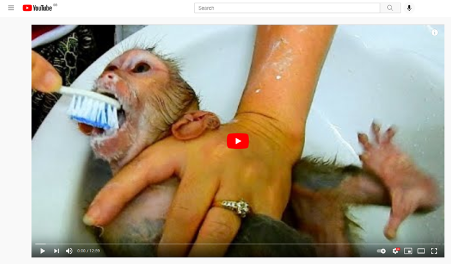
Animal cruelty content has become an out-of-control problem on the internet as social media platforms such as YouTube, Facebook and TikTok appear to be largely indifferent and ineffective. And sadly, primates (especially Macaques) make up a large percentage of these cruel videos. As a member of the Social Media Animal Cruelty Coalition, we have investigated this issue in the ‘Making Money From Misery’ report and we are calling on these social media giants to take definitive steps to stamp out this horrifying trend once and for all.
Top Macaque Facts
Long-tailed macaque (macaca fascicularis) also known as the Crab-eating macaque
- Probably the most successful primate species in Southeast Asia (apart from Homo sapiens.) Found in a wide range of habitats including primary and secondary forest, mangroves, plantations and the outskirts of towns and villages. Its success is largely owing to a varied diet of fruits, leaves, small mammals and birds, shellfish and crabs, as well as various insects and human leftovers.
- Identified by its extremely long tail, the shape of the muzzle and its grey-brown or reddish-brown colour. Its tail is longer than its height from head to rump.
- It has a noisy, aggressive temperament. Individuals sometime travel in large troops of up to 30.
- The species ranges from Indochina, Southern Thailand and Peninsular Malaysia to Sumatra, Java, Borneo and the Philippines. In Singapore it is the commonest primate.
- Lifespan: 15-30 years
- Weight: 3-9kg
- Size: 38-55cm
- Population trend: currently decreasing
- Population status: Least Concern (LC) on the IUCN Red List.
- Most births occur in May-July after a gestation period of 162 days.
- Females give birth to one infant and the baby is nursed until it is slightly over a year old.
Southern pig-tailed macaques (macaca nemestrina)
- Like the long-tailed macaque, the pig-tailed macaque enjoys a varied diet of fruit, seeds, young leaves, shoots, fungus and insects, while crabs, nesting birds and other invertebrates are also an important source of nutrition. The pig-tailed macaque competes with other primate species for fruit which forms 74% of its diet.
- The pig-tailed macaque is aptly named after its hairless, curly tail. It has a wide chest, narrow hips and golden brown colouring.
- The species has a wide range throughout South East Asia. Pig-tailed macaques can be found in North Eastern India, Southern China, Indonesia, Eastern Bangladesh, as well as in Burma, Thailand, Laos, Cambodia and Vietnam. They are also found in Malaysia.