
Slow Loris Conservation
Project Summary
Across Indonesia, slow lorises are being stolen from the wild to be sold as exotic pets and paraded in viral social media videos. To make them “safe” to handle, traders often rip out their teeth with pliers, without anaesthetic, causing immense suffering, infection, and often death.
Our partner YIARI operates the world’s largest slow loris rehabilitation centre. There, rescued animals receive expert medical care and, when possible, a second chance in the wild. More than 600 have already been returned to protected forests.
But rescue is just the beginning. YIARI is working to end the trade at its root by educating communities, enforcing wildlife laws, and protecting the forests that slow lorises depend on.
Local Partner: YIARI
.png?itok=oTpmrXPN)
Project aims and impact:
.png?h=57024e64&itok=NjypbENi)
.png?h=57024e64&itok=ovipA46p)
.png?h=57024e64&itok=fzvjcgHg)
Not Just A Cute Face
With their wide eyes, gentle movements, and quiet demeanour, slow lorises are easily mistaken for ideal pets. But these endangered primates are wild, venomous, and highly sensitive, entirely unsuited to captivity.
They are poached from their forest homes and trafficked through illegal markets or sold online. To make them easier to handle, their teeth are often torn out using pliers or nail clippers, a brutal mutilation that leads to unimaginable pain and a high risk of infection and death.
.JPG?h=7685ba0d&itok=LmjgVl5j)
 (2).JPG?h=7685ba0d&itok=MYJFo_4g)
A Global Leader in Rescue and Rehabilitation
In Java, YIARI runs a dedicated rehabilitation centre for slow lorises, the largest of its kind in the world. Confiscated animals receive urgent veterinary care and are housed in environments designed to support both their physical and psychological recovery.
Those who are healthy enough and able to forage are released into carefully selected forest habitats. So far, more than 600 slow lorises have been returned to the wild. Others, too badly injured to survive outside captivity, remain at the centre and receive lifelong care and enrichment.

-
Rescue
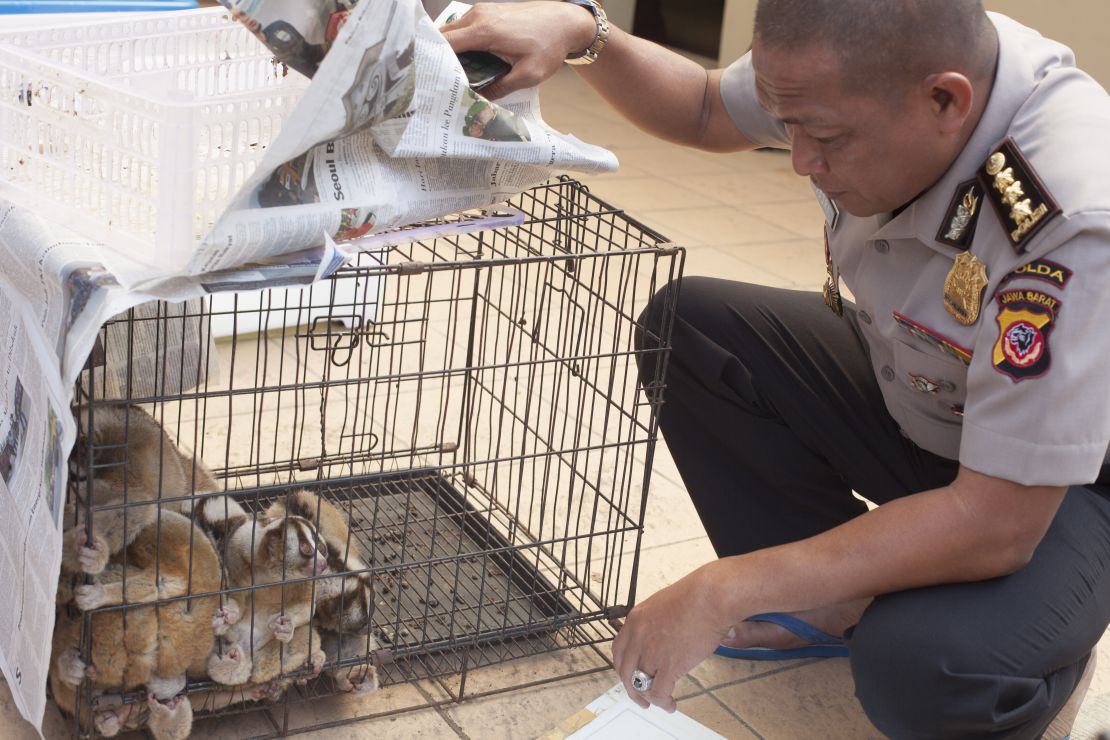
In the early years of the project run by our partners, YIARI, many rescues came from pet owners. The public could surrender slow lorises through an online portal, often following outreach or word-of-mouth. These rescues were coordinated by BKSDA (Indonesia’s Nature Conservation Agency), with YIARI providing emergency care and veterinary support. When a loris was surrendered, the team typically included a vet, a staff member to handle the animal, and an education officer to explain the legal implications and encourage cooperation.
Today, the focus has shifted to stopping the trade earlier—before the animals are sold or mutilated. Rescue efforts now aim to intercept slow lorises directly from poachers and dealers, sparing them the trauma of tooth removal and prolonged captivity. This approach improves the chance of a successful return to the wild and allows authorities to take action against those driving the trade. Healthy lorises caught early may be released immediately; others are brought to the centre for medical checks and rehabilitation. Each rescue is carefully documented to build a clearer picture of the illegal pet trade and help enforce the laws designed to protect these vulnerable primates.
-
Rehabilitation
Rehabilitating slow lorises is a complex process. These solitary, nocturnal primates often arrive at YIARI’s centre with health issues - many suffering from dental problems, infections, or behavioural trauma caused by prolonged captivity and abuse in the illegal pet trade. Upon arrival, each loris receives a full medical assessment, including blood and faecal tests. Those in good health enter a six-week quarantine period, while those in worse condition remain under close veterinary care until fit to continue rehabilitation. Many require dental surgery to remove infected, clipped teeth or treatment for injuries like broken limbs or embedded air gun pellets.
Following quarantine, lorises are moved into one of over 100 rehabilitation enclosures. These are tailored to individual needs - some for permanent sanctuary, others for animals preparing for release. The enclosures are enriched with natural materials to support climbing and foraging behaviours, and diet is carefully managed to counteract obesity and calcium deficiency, common in lorises previously fed sugary foods. Behavioural and feeding data is tracked throughout, helping the team identify individuals who may need extra support. Because so little is known about loris behaviour in captivity or survival post-release, the team continuously refines their methods, ensuring every loris has the best possible chance at returning to the wild.

-
Release
The goal of releasing rehabilitated lorises is to strengthen wild populations while preventing inbreeding, by reintroducing them into low-density habitats where they’re most likely to thrive. Every release is carried out according to IUCN guidelines, ensuring that animals are only returned to protected areas where threats from humans and habitat destruction are minimal.
For wild-caught lorises surrendered by communities near loris habitats, the process is straightforward: after a basic health check, they are returned directly to the forest without monitoring, as they retain their wild instincts. In contrast, lorises that were kept as pets or confiscated from the trade require a more cautious approach. These individuals undergo a “soft release” - spending time in open-top enclosures at the release site where they acclimatise to natural conditions, forage independently, and are monitored daily by YIARI’s Survey, Release and Monitoring (SRM) team. If they show strong natural behaviours and are in good health, they are released and tracked via radio collars for at least three months to ensure they adapt successfully.
Choosing suitable release sites is a careful process. YIARI conducts habitat surveys to confirm that the location has adequate food, safe conditions, and a wild population small enough to accommodate newcomers. Just as importantly, support from nearby communities is essential to long-term protection. Currently, slow lorises are released across three protected forests: Gunung Sawal in Java, Batutegi in Sumatra, and Gunung Tarak in West Kalimantan. If any loris shows signs of illness or injury after release, the team assesses and treats them in the field or returns them to the centre for specialist care.
.JPG?itok=a8mXAqpL)
Ending the Trade Before It Starts
To truly stop the suffering, we must stop the demand. YIARI works with schools, communities, and local authorities to raise awareness about the cruelty of the pet trade and the ecological importance of slow lorises. They provide specialist training to law enforcement officers to identify and respond to wildlife crime, shut down illegal markets, and prosecute offenders. In areas where YIARI is active, the number of lorises kept as pets has fallen by more than 90%.
Slow lorises can’t survive without their forests. Alongside its rescue and education work, YIARI monitors known habitats, helps prevent poaching, and partners with local communities to safeguard Indonesia’s remaining wild populations. This holistic approach of rescue, rehabilitation, education, enforcement, and habitat protection is giving slow lorises a real chance at survival.
.jpg?itok=lJtoild5)


.jpg?itok=PtJe2QIJ)
.jpg?itok=tEh4g1hB)
.jpg?itok=WMXyDTzU)
.png?itok=M25azlhk)